
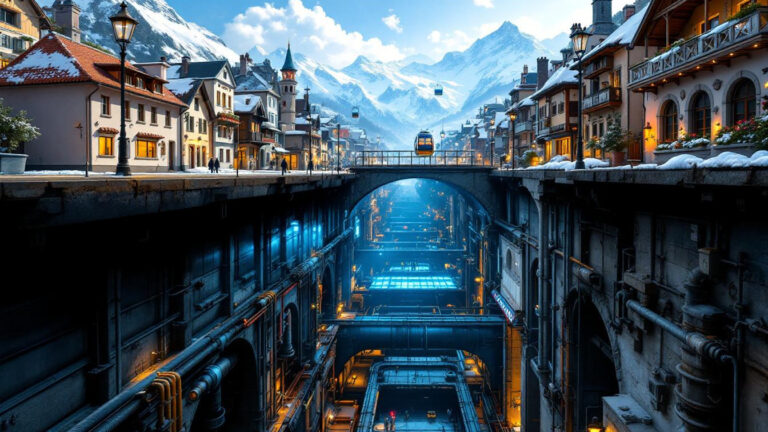
Switzerland is widely known for its stunning landscapes and top-notch infrastructure, but beneath its picturesque surface lies a complex and extensive underground world that rivals many mid-sized cities above ground. This vast subterranean infrastructure spans thousands of kilometers, showcasing the country’s innovative urban planning and commitment to efficient transportation. While many may marvel at the Alpine scenery, few understand the engineering feats that connect cities and regions deep beneath the earth. Switzerland’s network of tunnels, utilized for everything from transport to utilities, reflects the nation’s thoughtful approach to managing its mountainous terrain and high traffic volumes.
The Scale of Switzerland’s Underground Infrastructure
Switzerland’s commitment to building an extensive underground infrastructure is evident in its impressive network, which currently boasts around 1,852 tunnels stretching approximately 2,544 kilometers. This includes critical road, railway, and utility tunnels that not only enhance mobility but also protect against the harsh weather conditions typical of the region. The engineering is designed to optimize routes for both people and goods, making travel efficient and minimizing surface congestion.
Why Tunnels Matter
The rationale behind constructing such extensive tunnel networks lies in Switzerland’s challenging geography. With towering mountains and dense urban centers, traditional transport methods would lead to significant difficulties, including steep gradients and high costs. Thus, tunnels offer a practical solution to maintain connectivity without compromising the natural beauty of the landscape. The necessity of subterranean pathways has propelled the country to embrace this innovative infrastructure, ensuring both domestic and international travel remains seamless and reliable.
Major Engineering Marvels in the Underground
One of the most remarkable feats of Swiss civil engineering is the Gotthard Base Tunnel. Completed in 2016, it stretches an impressive 57 kilometers and is hailed as the longest railway tunnel in the world. This achievement not only enhances travel efficiency across the Alps but also exemplifies the dedication to creating modern infrastructure that supports economic growth. The tunnel allows trains to bypass steep inclines, making it a crucial element for connecting northern and southern Europe.
Integrating Utilities Underground
Switzerland’s underground infrastructure isn’t limited to transportation; it also includes a comprehensive system for utilities. Water conduits, high-voltage cables, and even data centers are strategically placed beneath the surface. This arrangement not only frees up space on the surface for residents and tourists but also enhances the country’s resilience against climate impacts. Utility corridors prevent disruptions during extreme weather events, ensuring continuity of essential services.
Future Developments and Sustainability
With urban areas experiencing ongoing growth, future expansions of Switzerland’s underground network are already in the works. Notably, a planned 30-kilometer railway tunnel linking Zurich to Rupperswil aims to ease traffic congestions. Such projects underscore a long-term vision that prioritizes sustainable development, allowing Swiss cities to expand while maintaining their quality of life. The focus remains on responsible urban planning that respects both natural and human environments.
Conclusion: A Model for the Future
Switzerland’s underground world serves as an influential model for other nations grappling with similar geographical challenges. By prioritizing long-term infrastructure development, the country sets an example for how to address urban congestion, enhance mobility, and maintain a commitment to environmental stewardship. As the network continues to expand, it will undoubtedly influence transportation and urban planning approaches worldwide, demonstrating the importance of innovative thinking in civil engineering.